Caddis Flies
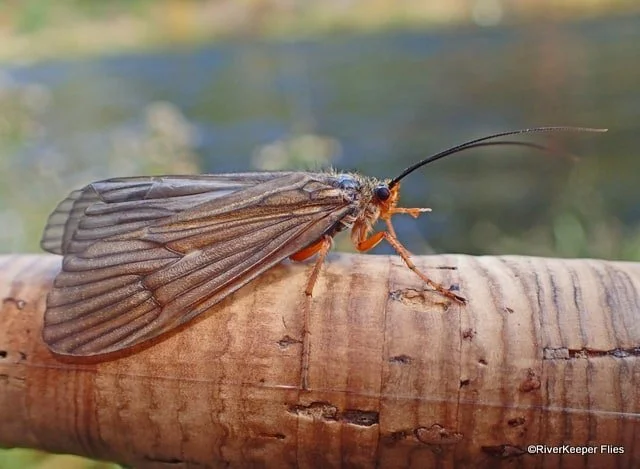
Caddis (order Trichoptera) are the moth-like cousins of the mayflies and stoneflies, and across Cameron's home waters they are arguably the most important trout food after the mayflies. A caddis looks like a small tan or gray moth at rest, holding its wings tented over its body like a pup tent rather than upright like a mayfly sail. "Caddis" is a catch-all the way "mayfly" is. On these rivers it covers several distinct insects that hatch at different times and call for different patterns, so this is the overview, and each one that matters has its own page.
The three that matter here
- Spotted Sedge (Hydropsyche) — the everyday workhorse. The summer and evening caddis on the Missouri and the freestones. When a report says caddis are "building" or the evening caddis fishing is on, this is usually the bug. Sizes #14–16, tan to ginger.
- Mother's Day Caddis (Grannom, Brachycentrus) — the big early-season blizzard hatch. Late April into May on the Clark Fork, Rock Creek, and lower Madison, often racing the spring runoff. Dark olive to black, #14–16.
- October Caddis (Dicosmoecus) — the West's biggest caddis and a marquee fall event. Large (#6–10) bright orange-tan adults from late September through October.
Life cycle and why it matters
Caddis are a complete-metamorphosis insect (egg, larva, pupa, adult), unlike mayflies, which skip the pupa. That extra stage is the key to fishing them. Larvae live on the bottom for most of the year. Some build portable cases of stone or stick (the case-builders, like October Caddis and Grannom); others spin silk nets and live free among the rocks (the net-spinners, like the Spotted Sedge). When it is time to hatch, the pupa rises through the water column to the surface or swims toward shore, which is the most vulnerable and most heavily fished moment. Adults then return to lay eggs, often diving or skittering on the surface in the evening, which draws aggressive surface strikes. The practical takeaway is that a caddis day usually fishes best subsurface (pupa) into the hatch and on top (adult) during emergence and the evening egg-lay.
Imitating patterns
Adult dries: Elk Hair Caddis, X-Caddis, Goddard Caddis, Stimulator (sized and colored to the species). Pupae and emergers: Tung Dart, UV Czech Caddis, Translucent Pupa, soft hackles. See each species page for size and color specifics.
References
- Wikipedia: Caddisfly (Trichoptera)