Sow Bug
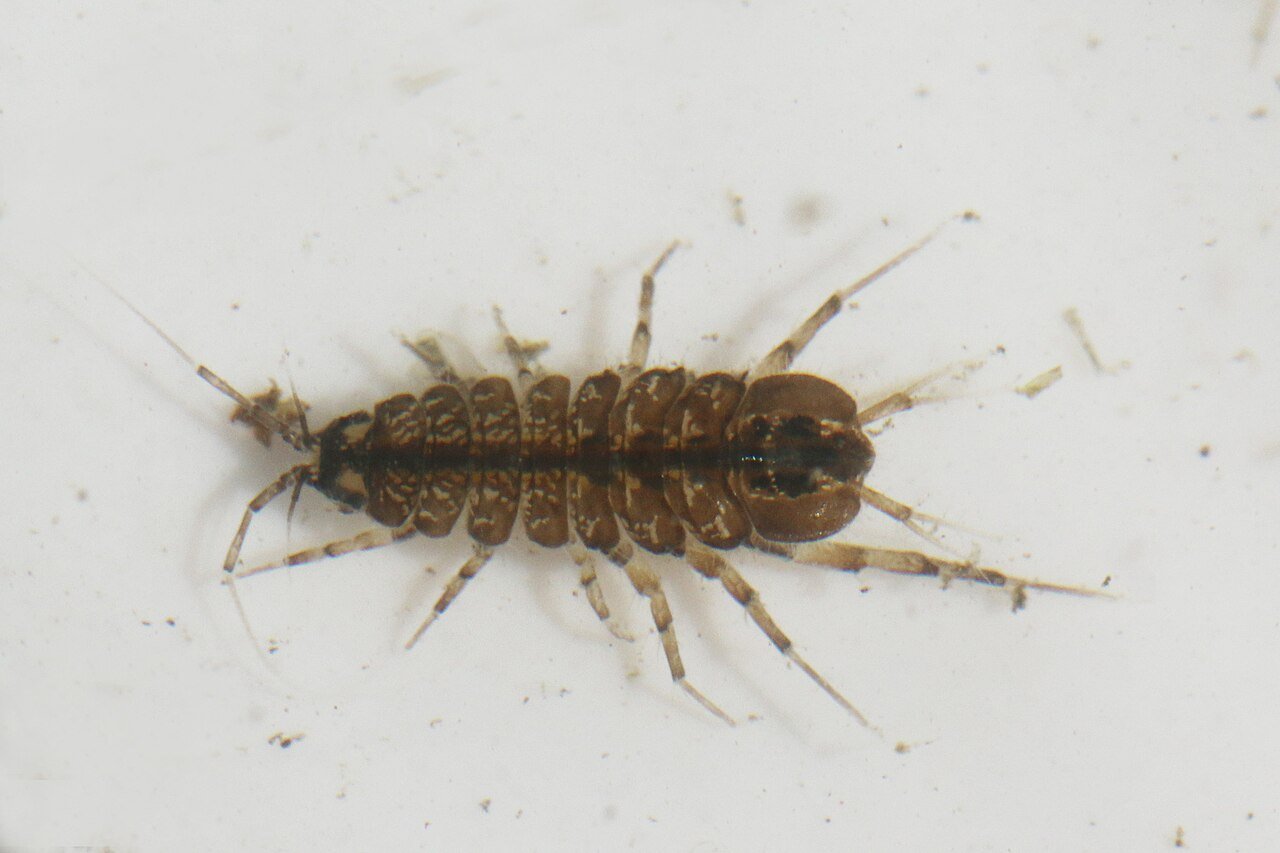
Latin: Asellus aquaticus (European), Caecidotea spp. (North American) Family: Asellidae (Isopoda) Sizes (fly): #14 – #18 Where: Spring creeks and tailwaters with vegetation and stable temperatures
Overview
Sow bugs are freshwater isopods — the aquatic cousins of the terrestrial pill bug or "roly-poly." Like scuds, they're crustaceans rather than insects, but they fish like nymphs: subsurface, year-round. They live among aquatic vegetation and detritus on the bottoms of spring creeks and tailwaters. Body color is typically gray to tan, with a flattened oval shape distinctly different from the curled-up scud profile.
Life cycle and angler relevance
No hatch event — sow bugs reproduce continuously and trout feed on them as a steady subsurface staple. They're particularly important on Missouri River tailwater stretches where they're a major component of the trout diet. The "Scud and Sow bugs" Obsidian fly category was added during the 2026 Missouri River fishing report skill development to give these patterns their own home.
Imitating patterns
Pink Bead Tungsten Epoxy Back Sow, Pederson's Sow (Missouri specialty), generic sow bug patterns in tan/gray (#14–18). Flat-bodied tying with a wire rib mimics the segmented dorsal plates.
References
- Wikipedia: Asellus aquaticus
- Sow Bug as a fishing target is most prominent on Missouri River tailwaters
- Field photo by Hakai Institute (CC-BY-NC-SA) via iNaturalist
Asellus aquaticus (Waterlouse)

Caecidotea — field photo (Calvert Island)