Scud
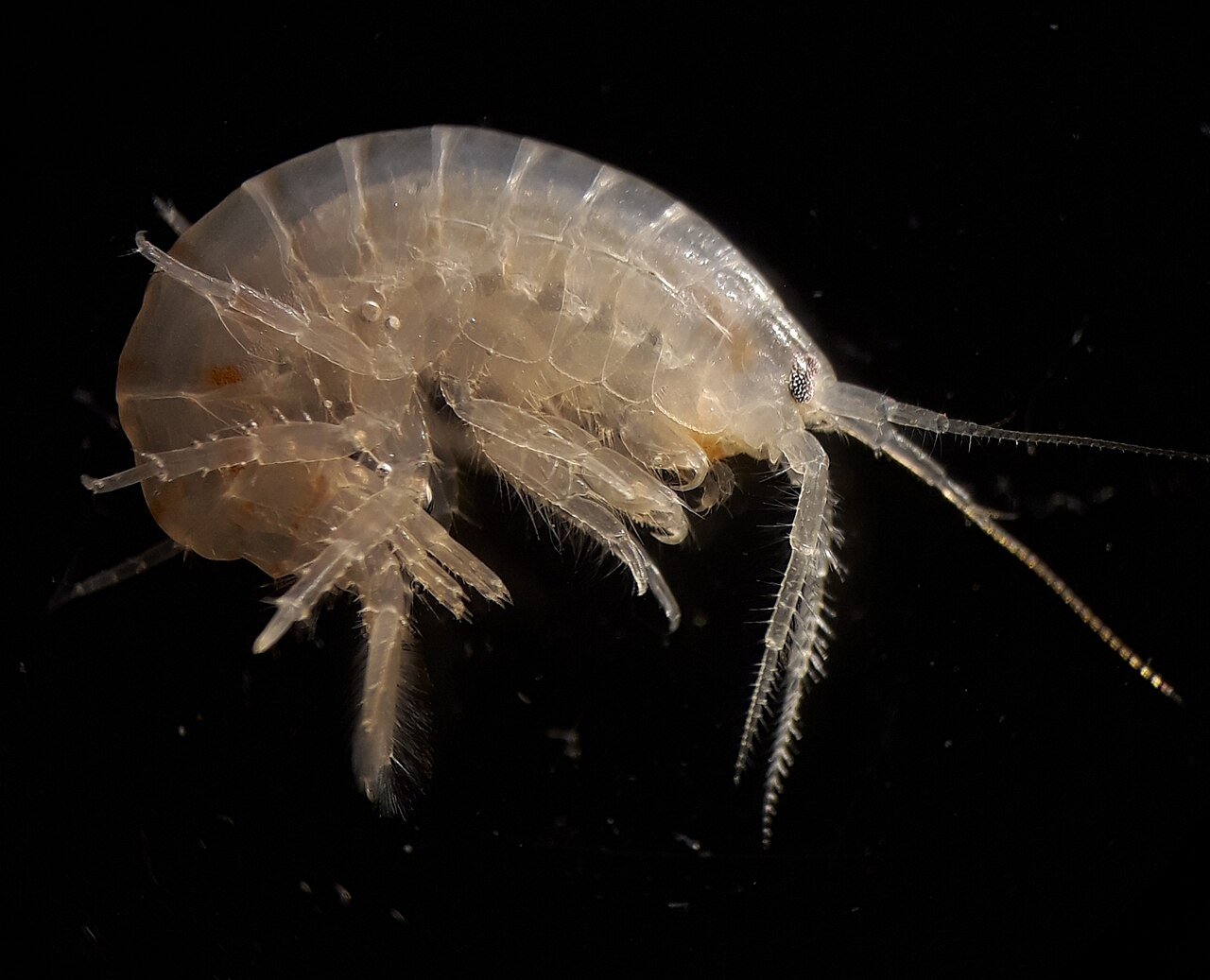
Latin: Hyalella azteca (small) and Gammarus spp. (larger) Family: Amphipoda (technically crustaceans, not insects) Sizes (fly): #12 – #18 Where: Tailwaters and spring creeks across North America; less abundant in fast freestones
Overview
Scuds aren't insects — they're freshwater amphipod crustaceans, distantly related to ocean shrimp. But for fly anglers they fall into the bug category because they fish exactly like a nymph: dead-drifted subsurface, all day, every day, year-round. Tailwater rivers like the Bighorn and Missouri have massive scud populations and the fish are tuned to them as a primary food. Colors range from olive to tan to pink (after molting); the orange/pink "shrimp" coloration of post-molt scuds is what gives the genre its eye-catching pattern colorways.
Life cycle and angler relevance
Scuds reproduce continuously and have no hatch event — they drift along the bottom and through vegetation 24/7/365. Cold-water rivers retain scud populations through winter, making them an essential subsurface staple. The Kingfisher 1/13/2025 winter report noted "Try throwing a variation of scuds and nymphs under the indicator to coax them into feeding."
Imitating patterns
Caviar Scud, generic scud patterns in olive/tan/pink (sizes 14–18), Tailwater Sow (similar genre), Pederson's Sow (Missouri tailwater specialty).
References
- Wikipedia: Hyalella azteca and Gammarus
- Mentioned in 2025 Kingfisher Blackfoot January report and many Missouri River reports
- Field photos by cannizag (CC-BY) and boreal_boy (CC-BY-NC) via iNaturalist
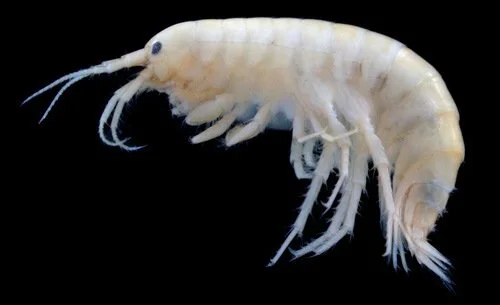
Gammarus — field photo 1 (La Cienega, NM)
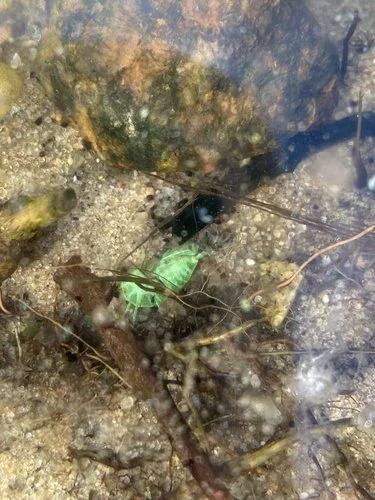
Gammarus — field photo 2 (Elk Island National Park, AB)