Midge
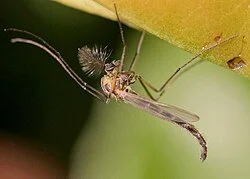
Latin: Family Chironomidae (non-biting midges) Sizes (fly): #18 – #26 Where: Worldwide; especially important on tailwaters and during winter on freestones
Overview
Midges are the year-round food source — the bug that keeps trout feeding through January and February when nothing else is hatching. Adults are small to tiny (most patterns are #20–26), with delicate clear or smoky wings. They're not glamorous like a salmonfly, but on cold winter days the only insects you'll see hatching are midges, and trout key on them with focus. The Kingfisher 12/5/2025 winter report noted "winter dry-fly windows are short and sporadic — mostly tiny midges."
Life cycle and angler relevance
The four life stages — larva (called a "bloodworm" when bright red), pupa, adult, and cluster (mating swarms drifting on the water) — all fish well at different times. Larvae and pupae are the heavy lifters subsurface. Pupae rising to the surface get suspended in the film and become especially vulnerable. Adult clusters can blanket the surface during winter, with trout sipping them in slow water.
Imitating patterns
Larvae: Mercury Midge, Zebra Midge, Black Midge, Ruby Midge, Hi-Vis Midge — all in #18–22. Pupae: Jujubee Midge, generic small wire-bodied midges. Adult clusters: Adams Midge Cluster, Bucky's Midge Cluster, Cluster Midge, Grizzly Midge Cluster, Griffith's Gnat. Emergers: Harrop's Hanging Midge.
References
- Wikipedia: Chironomidae
- Mentioned in 2025 Kingfisher Blackfoot winter reports plus essentially every Missouri River report (midges are a tailwater staple)
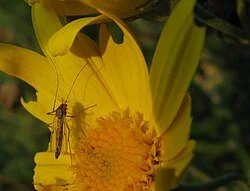
Female midge (close-up)
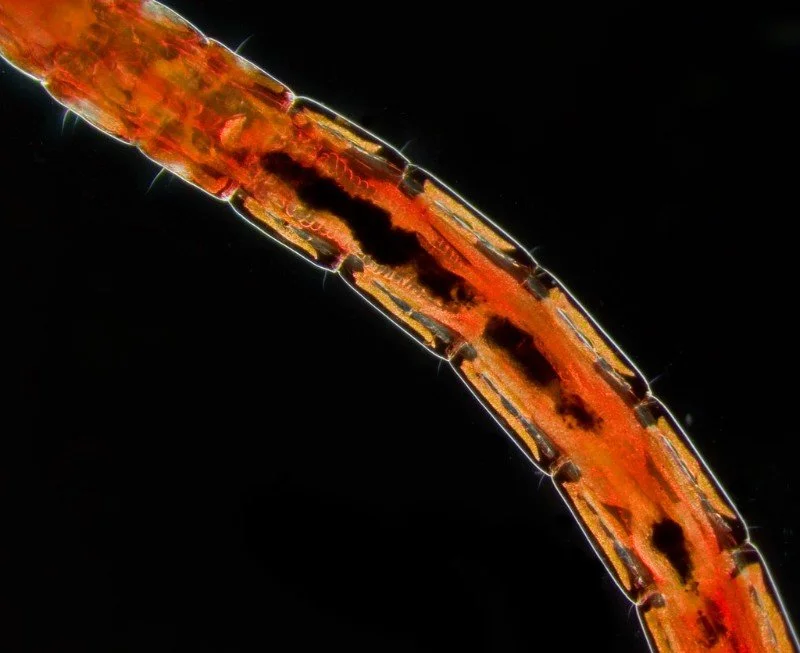
Larva (bloodworm)