October Caddis
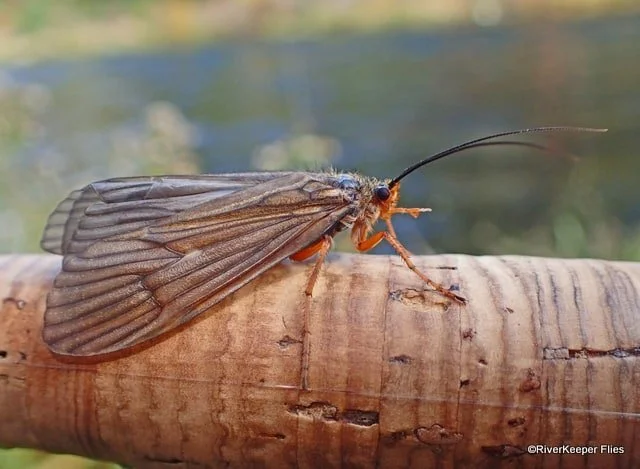
Latin: Dicosmoecus gilvipes (most common Western), D. atripes Family: Limnephilidae (case-builders) Sizes: #6 – #10 (large for a caddis) Where: Western North American freestones — Pacific Northwest and Northern Rockies
Overview
The October Caddis is the West's biggest caddis hatch and one of the most important fall events for trout fishermen. Adults are large (1.5–2 cm), with bright orange-tan bodies and brown wings — distinctive enough that even non-anglers notice them. The hatch peaks in late September through October, hence the name. Larvae build cylindrical cases of small stones and gravel, dragging them across the streambed for protection.
Life cycle and angler relevance
The fishing happens in three modes. (1) Larval stage — drifting case-builders are subsurface meals that fish key on year-round; pupae become especially active in the weeks before emergence. (2) Adult emergence — pupae crawl onto streamside rocks and emerge from their pupal cases; this can produce big rises when fish target the emergers in shallow margins. (3) Egg-laying females — adult females skitter and dap on the surface to drop eggs in the evening, drawing some of the most aggressive surface strikes of the year. The Kingfisher 10/8/2025 report noted "Swinging or drifting an October caddis pattern nymph is a killer method this time of year as well."
Imitating patterns
Adult dries: October Caddis Stimulator, generic large-caddis dries in orange (sizes 6–10), elk-hair caddis sized up. Pupae: October Caddis Pupa (orange/tan body), generic large caddis pupae. Larvae: cased caddis imitations, Pat's Rubber Legs in coffee/tan as a stand-in.
References
- Wikipedia: Dicosmoecus gilvipes
- Mentioned in: 2026-04-26 - 2025 Blackfoot River Historical Analysis - Kingfisher (October–November reports)
- Field photo by Jim Johnson (CC-BY-NC-ND) via iNaturalist
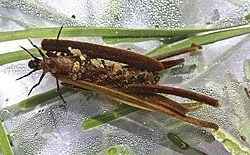
Larva (case-builder)

Field photo (Lewisville Regional Park, WA)