Ant
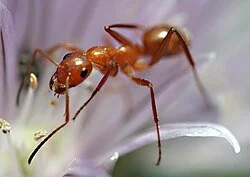
Latin: Family Formicidae (over 12,000 species) Sizes (fly): #14 – #22 Where: Worldwide; productive on any river bordered by trees or brush
Overview
Ants are the second-most-important terrestrial after grasshoppers — and on small streams, in technical low-water conditions, or during a flying-ant swarm, they're the more important of the two. Trout key on ants for two reasons: their formic-acid taste signature is distinctive (some research suggests trout actively prefer the flavor) and they sit in the surface film rather than on it, making them difficult to refuse. Late-summer flying-ant emergences can drop hundreds of winged ants on a river simultaneously, producing brief but spectacular feeding events.
Life cycle and angler relevance
Worker ants get knocked into the water year-round from overhanging vegetation. The big event is the flying-ant emergence — typically a single afternoon event after a warm rain — when winged reproductives leave the colony en masse and many end up on the water. Bionic and Glitter Ant patterns float well and ride low in the film; flying-ant patterns add wings.
Imitating patterns
Bionic Ant, Glitter Ant, generic foam ants (black or cinnamon), parachute ants, flying-ant patterns with CDC or hackle-tip wings.
References
- Wikipedia: Ant
- Mentioned in 2025 Kingfisher Blackfoot July–August reports
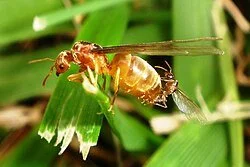
Flying ants — alate reproductives
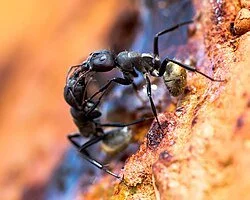
Camponotus (carpenter ant)