Skwala
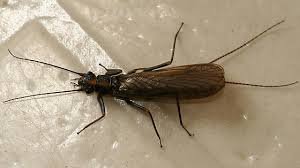
Latin: Skwala parallela / Skwala americana Family: Perlodidae Sizes: #8 – #12 Where: Western North American freestones — especially the Bitterroot, Clark Fork, Blackfoot
Overview
The skwala is the Western fly fisher's first true dry-fly hatch of the year. Adults are a slim olive-to-mottled-brown stonefly, considerably smaller than salmonflies but among the first big-meal items available to overwintered trout. The hatch typically peaks in early April but can run earlier in warm springs — the 2025 Kingfisher reports noted skwalas peaking in late March, about two weeks ahead of the long-term norm.
Life cycle and angler relevance
Adults crawl out and run streamside vegetation during warm afternoons. They're not active fliers, so windborne adults that fall onto the water are eaten readily. Best windows: early afternoon (1–4 PM) on warm sunny days when both nymphs and adults are most active. The smaller Nemoura (also called the Little Brown Stonefly) emerges concurrently — a single dark-olive Chubby Chernobyl in size 12–16 covers both bugs.
Imitating patterns
Foam adults: Chubby Chernobyl (olive, sizes 8–12), Water Walker (skwala-specific), MFC's Fool's Gold (realistic skwala). Nymphs: Pat's Rubber Legs (coffee/black), Double Bead Stone.
References
- Skwala parallela and S. americana are the two principal North American species; the Western S. americana is the one most relevant to Montana waters
- Mentioned in: 2026-04-26 - 2025 Blackfoot River Historical Analysis - Kingfisher
- Field photos by Mark Richman (CC-BY) via iNaturalist

Skwala americana — field photo 1

Skwala americana — field photo 2