Salmonfly
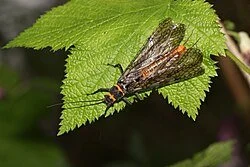
Latin: Pteronarcys californica Family: Pteronarcyidae (giant stoneflies) Sizes: #2 – #8 (one of the largest aquatic insects in the West) Where: Western North America — large, cold, oxygen-rich freestone rivers
Overview
The salmonfly is the iconic Rocky Mountain hatch — a 2–3 inch dark stonefly whose emergence triggers some of the year's most aggressive trout feeding. Adults are unmistakable: heavy bodies with orange-red coloring on the thorax, smoky wings, and a slow, laborious flight pattern. Nymphs spend two to three years on the streambed beneath rocks before crawling to shore to emerge.
Life cycle and angler relevance
Mature nymphs migrate toward shore in the days before emergence, making them especially vulnerable to nymphing rigs run tight to the bank. Adults emerge nocturnally on streamside vegetation, then take flight in late morning when air temperatures climb. The hatch progresses upstream as the river warms — anglers literally chase the hatch upriver for ~10 days. Trout key in hard to the surface during the peak emergence window; this is often the highest-volume dry-fly fishing of the year.
Imitating patterns
Foam adults: Rogue Foam Stone (orange/black), Chubby Chernobyl (size 4–8, black/orange), Water Walker. Nymphs: Pat's Rubber Legs (black or coffee, sizes 4–8), oversized Double Bead Stone, TJ Hooker.
References
- Wikipedia: Pteronarcys californica
- Adult and emerging photos: Wikimedia Commons (public domain)
- Mentioned in: 2026-04-26 - 2025 Blackfoot River Historical Analysis - Kingfisher
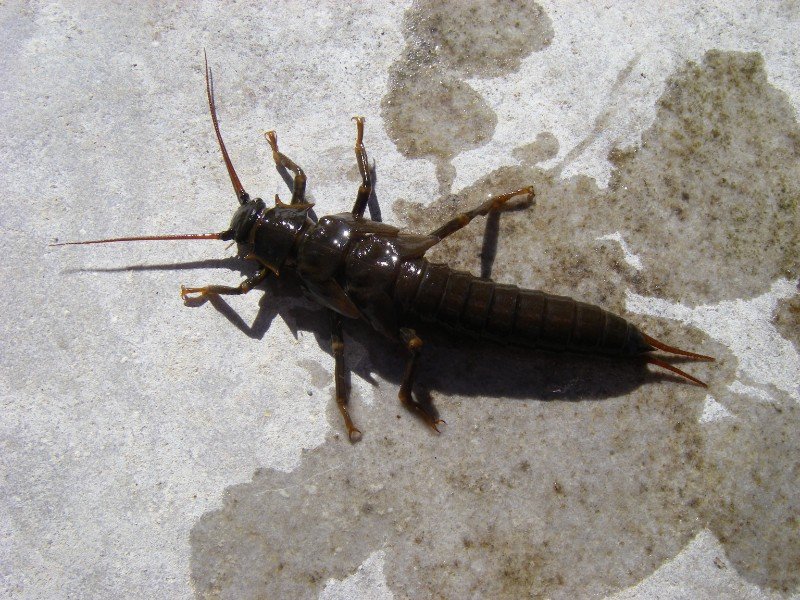
Nymph
Emerging from nymphal husk