Spotted Sedge
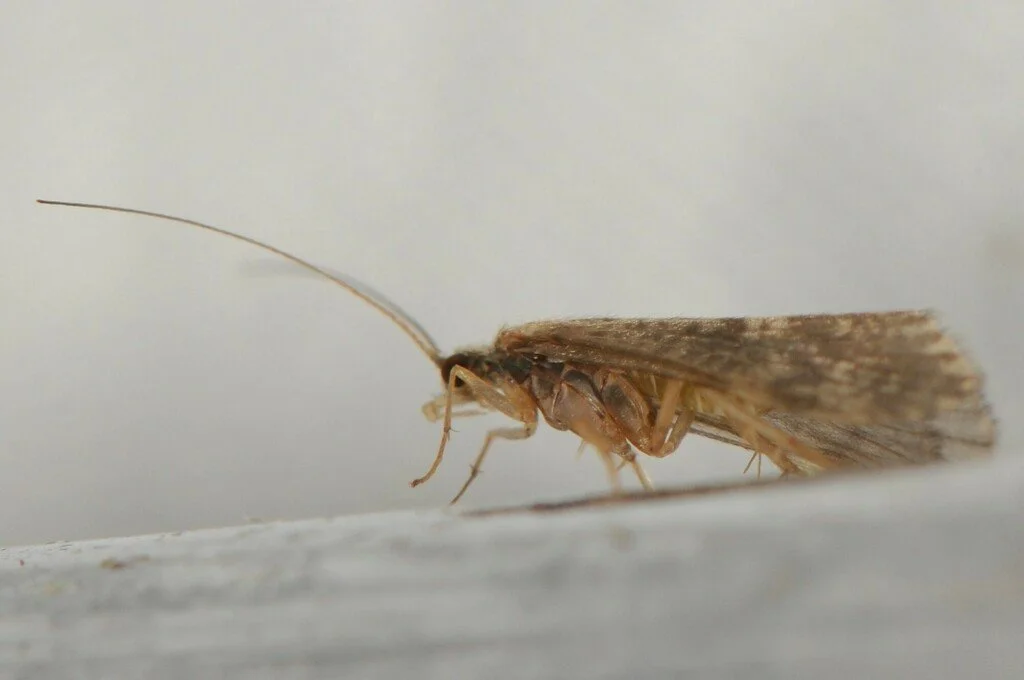
Latin: Hydropsyche spp. (the Spotted Sedge complex) Family: Hydropsychidae (net-spinning caddis) Sizes: #14 – #16 Where: Just about everywhere trout live in western Montana, especially the Missouri tailwater and the freestone riffles of the Clark Fork, Bitterroot, Blackfoot, and Rock Creek
Overview
The Spotted Sedge is the caddis you mean when you say "caddis" without thinking about it. It is the summer workhorse, the most abundant and widely distributed caddis on Cameron's home waters, with a tan to ginger body and mottled (spotted) brownish wings. When a report says caddis are "building" or that the evening caddis fishing has turned on, this is almost always the bug. Unlike the case-building caddis, Hydropsyche larvae are net-spinners: they live free among the rocks of fast, well-oxygenated riffles and spin tiny silk nets to strain food from the current, which is why they thrive in both tailwaters and freestone riffles.
Life cycle and angler relevance
The fishing happens in two main modes. First, the pupa. When emergence nears, the pupa cuts free of its shelter and rises through the water column to hatch, often well out in or below the riffle. This is the "caddis emerge from deeper water" point, and it is why a swung or dropped pupa fishes so well in the hours before the visible hatch. Second, the egg-laying adult. Females return in the evening, often in clouds, and dive or splash down to deposit eggs, drawing the aggressive, slashing rises that define a good caddis evening. Trout key on the pupa hard during emergence and on the adult during the egg-lay, with the heaviest action usually in the last hour or two of light.
Imitating patterns
Adult dries: Elk Hair Caddis, X-Caddis, Missouri River CDC Caddis, Corn-Fed Caddis, Missing Link Caddis, Spent Partridge Caddis (for spent egg-layers), all in tan to ginger, #14–16. Pupae and emergers: Tung Dart, UV Czech Caddis, Translucent Pupa, and soft hackles swung through the riffle.
References
- Wikipedia: Hydropsyche
- Parent overview: Caddis Flies
- Adult photo (New Mexico) by Elliott Gordon (CC BY) via iNaturalist
- Larva photo (Cupertino, CA) by Merav Vonshak (CC BY-NC) via iNaturalist
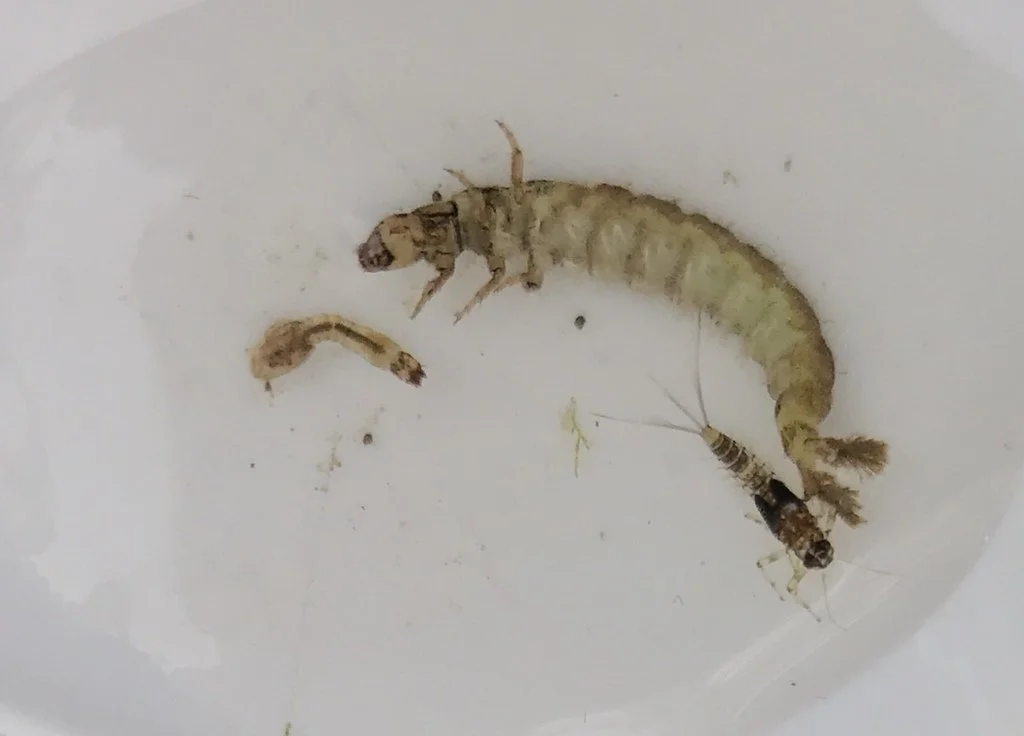
Larva (net-spinner)