PMD (Pale Morning Dun)
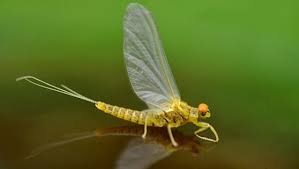
Latin: Ephemerella excrucians (most common), E. inermis, E. infrequens Family: Ephemerellidae Sizes: #14 – #18 Where: Across Western North America — most prolific on tailwaters and freestones with stable flows
Overview
The Pale Morning Dun is the dominant summer mayfly across the West. As the name suggests, adults emerge in mid- to late-morning (typically 9 AM – noon) and have a creamy yellow-tan body with pale dun wings. PMDs are bigger than BWOs and smaller than March Browns — the #16 is the workhorse size. They produce some of the season's most consistent dry-fly fishing on rivers like the Bighorn, Madison, Missouri, and Yellowstone.
Life cycle and angler relevance
Nymphs are crawler-type and live among rocks and gravel. The hatch is highly weather-dependent — bright sun and warm air drive the heaviest emergence. Cripples and emergers fish very well during the actual hatch; duns float for several seconds, giving trout time to track and rise. Spinner falls happen in the evening (typically 7 PM onward) and can be the best dry-fly opportunity of the day.
Imitating patterns
Adult duns: Parachute Adams (size 16, light olive), PMD Sparkle Dun, Hi-Vis BWO in lighter color. Emergers: PMD Cripple, Last Chance Cripple, Sprout Baetis (sized up). Nymphs: PMD-specific Pheasant Tail variants, Tung Jig Pheasant Tail, Frenchie.
References
- Ephemerella species are the genus — different species dominate at different latitudes; in Montana the rotation is infrequens → inermis → excrucians through the summer
- Mentioned in 2025 Kingfisher Blackfoot reports plus Missoula, Madison, and Missouri reports
- Field photos by Jeremy Collison (CC-BY-NC) via iNaturalist
Field Notes
2026-06-09 (Drafts)
PMDs and mayflies tend to emerge in shallower water. This is different than caddis, which emerge out of deeper water. I learned this from Phil on the Missouri River yesterday.

Field photo 1 (Tompkins County, NY)

Field photo 2 (Tompkins County, NY)