Mahogany Dun
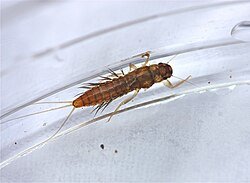
Latin: Paraleptophlebia bicornuta (most common Western), P. debilis Family: Leptophlebiidae Sizes: #14 – #18 Where: Throughout Western North America, often overlapping with BWO range
Overview
The Mahogany Dun is a small-to-medium fall mayfly with a deep reddish-brown body — color so distinctive it gives the species its common name. Mahoganies emerge in the afternoon, often on cool, overcast October and early November days when the BWO hatch is the only competition for trout attention. Together with BWOs, October caddis, and Hecuba, mahoganies fill out the fall dry-fly menu.
Life cycle and angler relevance
Nymphs are slow swimmers, holding in moderate currents close to bottom. Adults emerge in the surface film and ride drying wings for several seconds before flight — giving trout time to feed selectively on cripples and stuck duns. The Kingfisher 11/8/2025 report noted mahogany hatches "mostly came to a close with the hard cold snap" by early November — they're an indicator hatch for the transition into winter.
Imitating patterns
Adult duns: Mahogany-specific parachute dries (sizes 14–16), Parachute Adams in dark variant, Purple Haze in mahogany colorway. Emergers: Last Chance Cripple, Nyman's DOA Cripple Baetis sized up. Nymphs: small Pheasant Tail variants, dark Frenchie.
References
- Wikipedia: Paraleptophlebia
- Mentioned in 2025 Kingfisher Blackfoot fall reports
- Field photo by Z (CC-BY) via iNaturalist
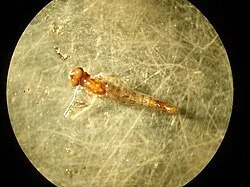
Paraleptophlebia guttata

Field photo (Thompson River, BC)