Spruce Moth
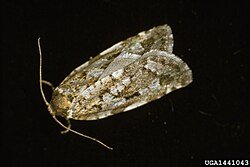
Latin: Choristoneura freemani (Western Spruce Budworm), C. occidentalis Family: Tortricidae Sizes (fly): #10 – #14 Where: Coniferous forests of Western North America — anywhere conifers line the river
Overview
The spruce moth is a mid-summer terrestrial event that some Western rivers see and others don't — it depends on the conifer outbreak cycle. When budworm populations are high (often a 5–10 year cycle), tan-bodied moths emerge from spruce and Douglas-fir forests in late July and early August, and many drift onto trout streams that flow through those forests. The fly is fished functionally as a caddis (which is why the corresponding fly note lives in Flies/Caddis Dries/), but biologically it's a moth, not a caddisfly.
Life cycle and angler relevance
Spruce moth larvae feed on conifer needles for one season, pupate, and emerge as adults in mid-summer. Many adults are blown or fall onto rivers, riding the surface as helpless meals. The Kingfisher 7/16/2025, 7/30/2025, and 8/11/2025 reports all noted spruce moths in the dry-fly mix — "mornings are alive with caddis, spruce moths, and nocturnal stoneflies." Spruce moth fishing peaks in the late afternoon and into the evening.
Imitating patterns
Spruce Moth-specific dries (tan elk-hair caddis style, sizes 10–12), elk-hair caddis in tan (general substitute), generic caddis-style dries in tan or buff.
References
- Wikipedia: Choristoneura freemani
- Mentioned in 2025 Kingfisher Blackfoot July–August reports
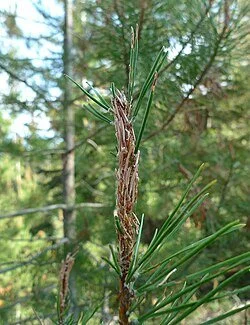
Habitat (lodgepole pine + budworm damage)
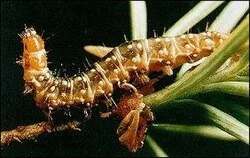
Larva (budworm)