Golden Stone
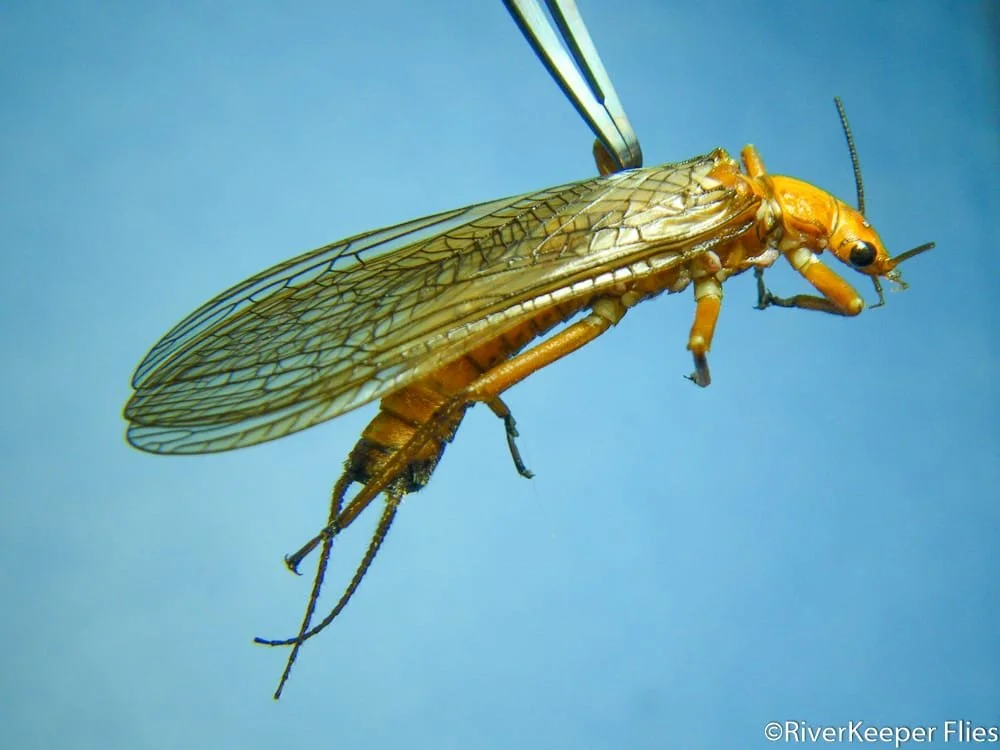
Latin: Hesperoperla pacifica (most common in Montana); also Calineuria californica Family: Perlidae Sizes: #6 – #10 Where: Western North America — same freestone rivers as salmonflies
Overview
The golden stone is the salmonfly's smaller cousin. Adults sport a yellow-tan to golden-amber body with darker wings, roughly 1 to 1.5 inches long. They emerge on the heels of the salmonfly hatch and overlap with it for a week or two — when both are out, anglers can fish either, but the bigger fly often wins attention. After salmonflies wane, golden stones become the dominant attractor pattern of mid-summer.
Life cycle and angler relevance
Like all large stoneflies, golden stone nymphs are multi-year crawlers that migrate to shore for emergence. The adult stage lasts a couple of weeks. Nocturnal stoneflies — a related cluster of species (often Acroneuria) — overlap with goldens in mid-to-late summer; reports that mention "nocturnal stones" are usually referring to this group.
Imitating patterns
Foam adults: Rogue Foam Stone (golden), Water Walker in size 8–10 (yellow/tan), Chubby Chernobyl in golden colorways. Nymphs: Pat's Rubber Legs (coffee/yellow), large Double Bead Stone, TJ Hooker.
References
- Wikipedia: Hesperoperla pacifica
- Mentioned in: 2026-04-26 - 2025 Blackfoot River Historical Analysis - Kingfisher
- Field photo by Rosemary J. Smith (CC-BY-NC) via iNaturalist
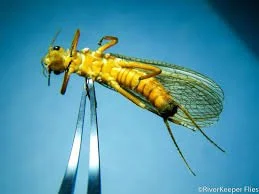
Underside view

Field photo (Bannock County, ID)